


Führerschein Kaufen Legal Erfahrungen
Add a review FollowOverview
-
Founded Date May 16, 1993
-
Sectors Operation Manager
-
Posted Jobs 0
-
Viewed 2
Company Description
A Brief History Of Buy A Driving License In Germany History Of Buy A Driving License In Germany
Buy a Driving License in Germany: Understanding the Legal Process and Avoiding Illegal Shortcuts
The question “Can I buy a driving license in Germany?” frequently occurs, particularly among those new to the nation or daunted by the possibility of strenuous screening. While the phrasing may recommend an easy transaction, it’s crucial to immediately clarify that acquiring a driving license in Germany in the literal sense is prohibited and brings extreme effects. There is no genuine way to simply buy a license without undergoing the needed training and passing the required assessments.
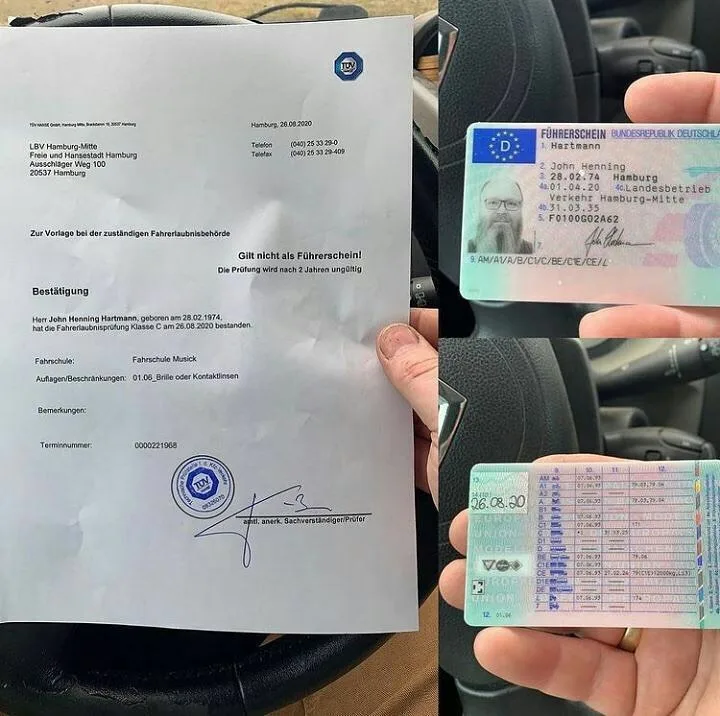
This short article will look into the complexities of getting a driving license in Germany legally. It will discuss the appropriate treatments, the costs included, and why attempting to “buy” a license through illegal methods is not just versus the law but also profoundly unsafe and eventually futile. Comprehending the legitimate path is necessary for ensuring roadway security and obtaining a legitimate driving license acknowledged within Germany and beyond.
The Reality: Obtaining a Driving License, Not Buying It
Instead of “purchasing” a license, the precise term is acquiring a driving license. Germany, renowned for its high driving standards and strict policies, has a structured process created to make sure all drivers are qualified and knowledgeable. This process involves detailed training, both theoretical and practical, followed by strenuous screening to evaluate a prospect’s readiness to operate a vehicle securely on public roads.
The German driving license system is built on the concept of competence-based licensing. It’s not about just paying a charge; it’s about demonstrating that you possess the needed abilities, understanding, and responsible attitude to be a safe driver. This method significantly adds to Germany’s reasonably low accident rates compared to some other countries.
Why “Buying” a License is a Dangerous Misconception
The idea of buying a driving license frequently originates from a misconception or a desire to circumvent the effort and time needed for correct training. However, trying to acquire a license through unlawful channels, such as purchasing counterfeit files or paying off officials, carries substantial dangers and is highly prevented for a number of important factors:
-
Legality and Criminal Penalties: Attempting to obtain a driving license fraudulently is a criminal offense in Germany. Individuals captured participating in such activities can deal with severe charges, including significant fines, imprisonment, and a rap sheet. This can have lasting consequences affecting future employment, travel, and residency permits.
-
Void License and Insurance Issues: A fraudulently obtained driving license is not recognized as legitimate. If caught driving with a phony license, you will be thought about driving without a license. This leads to additional legal repercussions and can revoke your car insurance. In the event of a mishap, you will be held totally responsible for damages, as your insurance will likely be void.
-
Threat to Public Safety: Bypassing correct training and screening jeopardizes not just your own security but likewise the security of all other roadway users. Driving requires a complex set of abilities, knowledge of traffic laws, and responsible decision-making. Individuals who have not undergone correct training are ill-equipped to handle the challenges of driving, increasing the danger of mishaps and possibly triggering serious harm or fatalities.
-
Ethical Concerns: Engaging in unlawful activities weakens the integrity of the licensing system and reveals an outright neglect for the guideline of law. It contributes to corruption and deteriorates trust in institutions designed to guarantee public security.
The Legitimate Path: Steps to Obtaining a German Driving License
The proper and just safe method to get a driving license in Germany is to follow the recognized legal process. This procedure, while requiring, is developed to equip you with the essential skills and knowledge to be a responsible and safe driver. Here are the essential steps involved:
1. Enrollment in a Driving School (Fahrschule):
- You must sign up with a formally recognized driving school. Picking a respectable school is vital as they will assist you through the entire procedure.
- Driving schools offer courses in German, and progressively, in English, particularly in bigger cities. Make sure the school uses guideline in a language you are comfy with.
- Upon enrollment, you’ll receive research study products and be arranged for mandatory theory lessons.
2. Theory Lessons and Examination:
- Theory lessons cover German traffic laws, road signs, safe driving practices, vehicle technology, and ecological factors to consider. The number of obligatory lessons depends upon the license classification you are making an application for. For a basic car license (Class B), it usually involves around 12 double lessons of standard theory and extra specific lessons.
- After completing the obligatory lessons, you should pass a computer-based theory test conducted by a main testing organization (TÜV or DEKRA).
- The theory test consists of multiple-choice questions and video-based concerns. You need to attain a minimum passing score to proceed to practical training.
3. Practical Driving Lessons:
- Once you pass the theory test, you can start useful driving lessons with your driving instructor.
- The number of practical lessons needed varies considerably depending upon specific discovering speed, prior driving experience (if any), and the instructor’s assessment of your progress.
- Obligatory unique driving lessons are included, covering motorway driving, night driving, and driving exterior of metropolitan locations.
- Practical lessons are important for developing driving abilities, understanding traffic circumstances, and discovering to use the theory understanding in real-world scenarios.
4. Practical Driving Examination:
- After your driving instructor considers you ready, you will be set up for the useful driving test.
- The practical test is performed by an examiner from TÜV or DEKRA, accompanied by your driving instructor.
- The test usually lasts around 45-60 minutes and assesses your driving capability in various traffic scenarios, including city driving, rural roads, and potentially motorway driving.
- The examiner will assess your general driving skills, adherence to traffic laws, smooth vehicle control, observation skills, and safe driving behavior.
5. License Issuance:
- If you successfully pass both the theory and useful assessments, you will get your German driving license.
- The license is generally issued soon after passing the dry run, often on the exact same day or within a few days.
- You will get a probationary driving license (Probezeit) for the first 2 years. Throughout this duration, stricter rules use, particularly relating to traffic infractions.
Costs Associated with Obtaining a Driving License
While you can not “buy” a license outright, there are significant costs connected with the genuine process. Comprehending these expenses can help you spending plan appropriately. These costs can differ depending on the driving school, your knowing speed, and test costs, however usually consist of:
- Driving School Enrollment Fee: This is a one-time registration charge charged by the driving school.
- Theory Lesson Fees: Fees are charged per theory lesson.
- Knowing Materials: Costs for textbooks, online knowing platforms, and practice tests.
- Practical Lesson Fees: Fees are charged per practical driving lesson. This is typically the most significant cost element, as the number of lessons needed differs.
- Presentation for Theory Test Fee: A fee to present yourself for the theory test at TÜV/ DEKRA.
- Presentation for Practical Test Fee: A fee to present yourself for the dry run at TÜV/ DEKRA.
- License Issuance Fee: A fee charged by the authorities for providing the driving license.
- Eye Test and First Aid Course: These are necessary requirements and involve separate charges.
List of Costs (Approximate Range):
- Driving School Enrollment: EUR50 – EUR200
- Theory Lessons (Basic Course): EUR200 – EUR400
- Knowing Materials: EUR50 – EUR100
- Practical Lessons (per lesson): EUR40 – EUR70 (Number of lessons varies significantly)
- Theory Test Fee: EUR25 – EUR30
- Practical Test Fee: EUR120 – EUR150
- License Issuance Fee: EUR40 – EUR50
- Eye Test: EUR20 – EUR30
- Emergency Treatment Course: EUR30 – EUR50
Essential Considerations:
- Time Commitment: Obtaining a German driving license needs a considerable time dedication, usually varying from a few weeks to a number of months, depending upon specific knowing rate and lesson accessibility.
- Language Proficiency: While some driving schools provide English instruction, a fundamental understanding of German can be advantageous, specifically for navigating theoretical materials and traffic check in day-to-day driving.
- Perseverance and Perseverance: The process can be difficult, and it needs perseverance and perseverance. Do not be discouraged by preliminary difficulties. Consistent effort and a positive attitude are essential to success.
In Conclusion:
While the concept of “buying” a driving license might appear appealing to those looking for a fast and easy service, it is essential to comprehend that such attempts are illegal, hazardous, and ultimately counterproductive. The legal procedure for obtaining a German driving license is designed to make sure road safety and produce proficient drivers. By enrolling in a reliable driving school, vigilantly studying, practicing efficiently, and adhering to the established procedures, you can effectively obtain a valid German driving license and take pleasure in the freedom and obligation of driving lawfully and safely. Keep in mind, your security and the safety of others on the roadway are vital, and proper training is the only legitimate course to accomplishing this.
Regularly Asked Questions (FAQs)
Q: Is it possible to get a German driving license without going to driving school?A: No, registration in a recognized driving school is obligatory in Germany. Driving schools provide vital theoretical and useful training and guide you through the whole licensing process.
Q: Can I use my foreign driving license in Germany?A: Depending on your native land, you may be able to utilize your foreign driving license in Germany for a restricted period (typically six months). After this period, you will normally need to acquire a German driving license. For licenses from EU/EEA nations, acknowledgment is normally simple. For licenses from non-EU/EEA countries, you may need to undergo a conversion procedure, which may involve theory and/or practical tests.
Q: How long does it require to get a German driving license?A: The period varies, but it generally takes in between 2 to 6 months. Elements affecting the timeframe include your learning speed, accessibility of driving lessons, and waiting times for tests.
Q: What occurs if I fail the theory or dry run?A: If you fail either test, you are allowed to retake it. There is usually a waiting period before you can retake the test, and you may need extra lessons before trying the useful test again. There is no limit to the variety of times you can retake the tests, but each attempt involves extra costs.
Q: Can I get a driving license in Germany if I don’t speak German?A: While most driving schools mainly operate in German, some schools in larger cities provide courses and guideline in English. It’s essential to find a driving school that can provide direction in a language you understand. The theory test is available in numerous languages, consisting of English.
Q: What is the probationary duration (Probezeit) for brand-new drivers füHrerschein in schweiz Kaufen Germany?A: New drivers in Germany undergo a two-year probationary duration (Probezeit). During this duration, stricter guidelines apply, and traffic infractions bring much heavier charges. Major offenses during the Probezeit can cause compulsory participation in refresher courses or even revocation of the driving license.
Q: What is the minimum age to get a driving license in Germany?A: The minimum age for a basic car driving license (Class B) in Germany is 18 years of ages. Nevertheless, “accompanied driving” (Begleitetes Fahren mit 17) is possible from the age of 17, allowing young drivers to drive with a designated adult manager.
Q: Is it more expensive to get a driving license in a huge city or a rural area?A: Driving school charges and lesson costs can often be somewhat higher in bigger cities due to higher operating costs. However, the distinction is usually not considerable. Schedule of English-speaking driving schools might be better in larger cities.