


Metal Wheelchair Ramps
Add a review FollowOverview
-
Founded Date October 9, 1924
-
Sectors Maintenance Manager
-
Posted Jobs 0
-
Viewed 8
Company Description
What’s The Current Job Market For Portable Ramp For Wheelchairs Professionals Like?
The Importance of Portable Ramps for Wheelchairs: A Comprehensive Guide
Navigating the world can provide obstacles for individuals who utilize wheelchairs, particularly when it pertains to accessibility in public areas and even within the home. Portable Ramp For Wheelchairs ramps for wheelchairs have emerged as essential tools to bridge the gap, providing safe entry and exit points for those who rely on mobility devices. This blog post will dig deeper into the significance of portable ramps, their types, and their various applications, while likewise attending to some frequently asked questions.
The Benefits of Using Portable Ramps
Portable ramps provide a range of benefits that enhance the mobility and self-reliance of wheelchair users. Here are some essential advantages:
| Benefit | Description |
|---|---|
| Ease of access | Ramps help with much easier access to structures and automobiles. |
| Portability | Lightweight design enables users to carry them easily. |
| Versatility | Suitable for different surface areas, consisting of stairs and curbs. |
| Cost-efficient | More budget-friendly than permanent ramp setups. |
| Easy to use | Easy to set up and eliminate, providing convenience. |
| Safety | Decreases the threat of accidents when browsing obstacles. |
Types of Portable Ramps
When selecting a portable ramp, it’s vital to consider the particular requirements and scenarios the user might deal with. The following list describes the most common kinds of portable ramps available:
-
Folding Ramps:
- These ramps can be folded in half, making them simple to store and transport. Ideal for lorries and temporary setups.
-
Telescoping Ramps:
- Designed to extend and pull back, telescoping ramps provide personalized lengths based upon the height of the step or curb.
-
Single-fold Ramps:
- Single-fold ramps are lightweight and provide a strong bridge over little obstacles. They are typically used for vehicles and entrances.
-
Multi-fold Ramps:
- These ramps can accommodate larger loads and appropriate for usage in business settings. They often offer double tracks for wheelchairs and scooters.
-
Threshold Ramps:
- Used for entrances or small steps, limit ramps come in different heights and sizes to guarantee a smooth transition.
How to Choose the Right Portable Ramp
Picking the proper portable ramp requires mindful consideration of various aspects. Here’s a guideline to help users make an informed choice:
| Factor | Considerations |
|---|---|
| Weight Capacity | Make sure that the ramp can support the weight of the user and their wheelchair. |
| Length and Height | Measure the height of the action or curb and select a ramp that offers the correct incline. Portable ramps normally need a 1:12 slope ratio. |
| Product | Search for durable products like aluminum, which are both lightweight and robust. |
| Surface Type | Non-slip surfaces make sure safety, specifically in wet conditions. |
| Mobility | Lightweight designs and bring deals with boost mobility. |
| Alleviate of Setup | Select ramps that can be established quickly and easily by the user or caregiver. |
Frequently Asked Questions (FAQ)
1. Are portable ramps safe for all types of wheelchairs?
Yes, portable ramps are designed to securely accommodate most manual and powered wheelchairs, provided that the weight capability and dimensions match the specifications.
2. How do I know which length ramp I require?
To figure out the appropriate length, determine the height of the action or curb. As a general standard, a 1:12 slope ratio is suggested, implying that for every single inch of height, you need a minimum of 12 inches of ramp length.
3. Can I use a portable ramp outdoors?
Absolutely! Many portable ramps are created for outdoor use and feature weather-resistant products. Nevertheless, always guarantee the ramp has a non-slip surface, specifically in rainy or snowy conditions.
4. Do I need to have a specific type of wheelchair to utilize a portable ramp?
Not necessarily. Most portable ramps are flexible and can accommodate various types of wheelchairs, consisting of manual and powered designs. However, examining the weight requirements is important.
5. Are portable ramps easy to store?
Yes, many portable ramps are designed with portability in mind and can be folded or collapsed for simple storage.
6. Can a portable ramp be utilized for a scooter?
Yes, many portable ramps are ideal for both wheelchairs and scooters, as long as they satisfy the needed weight capacity and dimensions.
Portable ramps for wheelchairs play a necessary role in promoting self-reliance and availability for individuals with mobility obstacles. By comprehending the advantages, types, and factors to consider when choosing a ramp, users can make educated decisions that positively impact their daily lives.
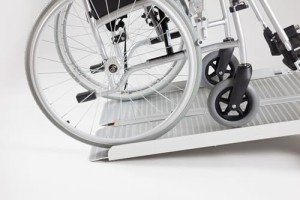
By offering a practical solution to overcome barriers, portable ramps not only boost the mobility of wheelchair users however likewise foster inclusivity and equality in society. Investing in an appropriate ramp can substantially enhance the quality of life for users, permitting them to engage more easily with their environment.
In a world that’s progressively focusing on ease of access, portable ramps stand apart as a testament to development developed to enhance the lives of people with disabilities. Whether utilized at home, in vehicles, or in public areas, these ramps work as essential tools for boosting independence and mobility.